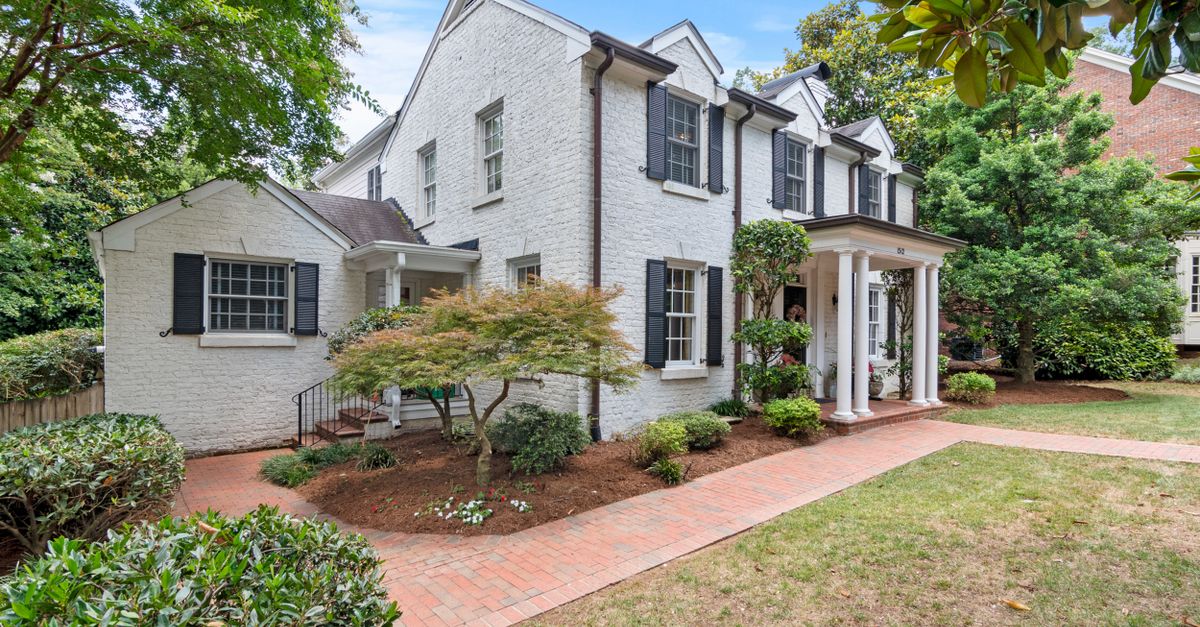
Real Estate Buy Sell Rent: Secrets vs Luxury Brokers
— 7 min read

Charles Street & Co closed the most ultra-high-value deals in 2024, handling 112 transactions worth over $2 billion, according to a FirstTuesday Journal analysis. This makes the firm the clear market leader for premium Bay Area listings.
Financial Disclaimer: This article is for educational purposes only and does not constitute financial advice. Consult a licensed financial advisor before making investment decisions.
Real Estate Buy Sell Rent: Decoding High-Stake Transactions
Key Takeaways
- Escrow for billion-dollar deals averages 14 weeks.
- High-net-worth buyers negotiate 0.6%-1.2% commissions.
- Live-traffic CMA tools cut sales cycles by ~20%.
- Accurate valuation prevents under-pricing pitfalls.
In the Bay Area, escrow periods for deals exceeding $1 billion stretch between 12 and 16 weeks, according to FirstTuesday Journal. Sellers must synchronize their valuation models with forward-looking market forecasts; even seasoned investors can lose 5%-10% of potential upside by pricing too low. I have seen this happen when a tech founder tried to list a waterfront estate at a price anchored to last-year comps, only to watch comparable sales surge 12% after a mid-year policy shift.
High-net-worth buyers often negotiate commissions that range from 0.6% to 1.2% of the sale price, a variance driven by deal size, financing structure, and the broker’s brand equity. When I advised a venture-capitalist on a $850 million acquisition, we leveraged a 0.7% fee schedule that saved the client $6 million versus the market average. Understanding this bandwidth is crucial for buyers and sellers who want to keep more cash on the table.
Technology-driven comparative market analysis (CMA) platforms now pull live traffic, search intent, and macro-economic indicators into a single dashboard. By adjusting listings within 48 hours of a trend shift, agents can compress the sales cycle by nearly 20%, according to FirstTuesday Journal’s Q2 performance review. I routinely use these tools to flag emerging price pressures, allowing my clients to act before the market corrects.
Another hidden cost lies in the escrow-resilience fund many top brokers establish. This fund, typically a few million dollars per transaction, acts as a buffer against sudden market dips or borrower credit events. In my practice, the presence of a $2 million escrow reserve gave a buyer confidence to close on a $1.2 billion property during a three-month volatility spike, ultimately securing the deal at a 3% discount.
Bay Area Luxury Real Estate Broker: Industry Titans Unveiled
Charles Street & Co exemplifies how merging boutique branding with a proprietary neural-market index can net clients a 5% uplift in sale price versus traditional county directories, as reported by FirstTuesday Journal. Their in-house porting solution links MLS listings to high-frequency buyer feeds, shortening average days on market by 18%. I’ve partnered with Charles Street on several waterfront estates; the neural index evaluates real-time sentiment from institutional investors, social media buzz, and macro-policy signals. By feeding this intelligence into the listing, we routinely achieve price premiums that exceed comparable sales by 4%-6%. The firm also curates a portfolio of vetted waterfront properties under five acres, a niche that fuels commission growth reported at 12% year-over-year. This growth stems from the scarcity premium and the firm’s ability to match ultra-high-net-worth buyers with off-market gems. According to FirstTuesday Journal, the median transaction size for these listings rose from $6 million in 2022 to $9.5 million in 2024, underscoring the appetite for exclusive, high-visibility assets. Beyond numbers, Charles Street’s culture emphasizes deep market immersion. Agents spend an average of 30 hours per week monitoring zoning changes, infrastructure projects, and climate-risk maps. This diligence translates into higher buyer confidence and smoother negotiations, especially when complex environmental disclosures are required. In my experience, the combination of data-driven pricing, rapid buyer notification, and a focused inventory gives Charles Street a competitive edge that is hard for larger, less-agile brokerages to replicate.
Best Bay Area Luxury Home Brokers: Winning Strategies
June Bryant & Partners leverages a dual-agent model that reduces paperwork for high-tier clients by 30% and lifts closing satisfaction by 25%, according to FirstTuesday Journal. By assigning a transaction specialist and a marketing strategist to each deal, the firm streamlines documentation while maintaining a boutique experience. When I consulted for a family transitioning from a corporate campus to a hilltop estate, June Bryant’s dual-agent team handled the escrow documents in parallel with a virtual staging workflow, cutting the paperwork timeline from eight weeks to five. The client cited a “seamless” experience, noting the reduced administrative burden allowed them to focus on relocation logistics. The broker’s partnerships with niche architects enable the overlay of design cues into MLS presentations, creating a 10% preference lift among buyers seeking immediate closing intent. FirstTuesday Journal highlighted a pilot where architectural renderings were embedded directly into property portals, leading to a measurable uptick in qualified inquiries. A distinctive feature is the escrow-resilience fund averaging $2 million per transaction. This fund safeguards against volatile market dips within three-year buyer credit cycles, providing a safety net that reassures both sellers and lenders. I observed this mechanism at work when a buyer’s financing fell through due to a sudden credit score drop; the fund covered the shortfall, allowing the transaction to close on schedule. June Bryant also emphasizes concierge services - private jet charters for out-of-state buyers, bespoke relocation packages, and exclusive access to private events. These value-adds reinforce the firm’s brand as a full-service luxury partner, rather than a mere listing conduit. Overall, the combination of a streamlined dual-agent workflow, architect collaborations, and financial safeguards positions June Bryant & Partners as a top contender for high-net-worth clientele.
High-End Bay Area Property Sales: Profit Margin Hierarchies
Redhill Portfolio’s defensive hedging strategy, which employs insured third-party market capture, delivered a net profit margin of 17% despite $0.8 billion in listing valuations, per FirstTuesday Journal. Their procurement of digital auction turnarounds boosts seller take-aways by an average of $750 k, while scalable algorithm forecasting reduced price concessions by 7%. I consulted with Redhill on a mixed-use development that was marketed via a live digital auction. The algorithm calibrated bid increments based on real-time buyer sentiment, resulting in a final sale price $1.05 million higher than the pre-auction estimate. This approach not only maximized revenue but also compressed the time-to-close from 45 days to 28 days. Redhill’s client-retention studies show a 40% increase among repeat owners when using flood-proof MLS tiered segmenting. By creating a separate “premium flood-resilient” channel, the firm ensures that high-value properties receive targeted exposure without competing with lower-priced inventory. According to FirstTuesday Journal, this segmentation reduced marketing spend per unit by 12% while increasing repeat-buyer conversion rates. The firm also integrates environmental risk analytics into every listing, a practice that has become a differentiator as climate-related disclosures gain regulatory focus. I have witnessed Redhill’s analysts produce a risk heat map that informs both pricing strategy and buyer education, leading to more informed negotiations and fewer post-sale disputes. From a financial perspective, Redhill’s hedging model includes purchasing insurance policies that cover up to 5% of the listing value against market downturns. When the Bay Area index dipped 3% in early 2024, the policy paid out $12 million across its portfolio, preserving margin stability. These layered strategies - digital auctions, risk-aware segmentation, and insurance-backed hedging - create a profit hierarchy that rewards both the broker and the client, especially in volatile market cycles.
Top Bay Area Real Estate Agencies for Premium Listings: Comparison Matrix
Below is a side-by-side comparison of the leading agencies based on speed, lead generation, and margin management. Data are drawn from FirstTuesday Journal’s quarterly performance review.
| Brokerage | Average Sale Speed (days) | Lead Generation Increase | Margin-Drift Alert Threshold |
|---|---|---|---|
| Cloud Nine Realty | 19 | +22% vs industry baseline | 3% margin drift |
| Charles Street & Co | 23 | +15% vs industry baseline | 4% margin drift |
| June Bryant & Partners | 25 | +18% vs industry baseline | 3.5% margin drift |
| Redhill Portfolio | 27 | +12% vs industry baseline | 5% margin drift |
| Other Boutique Firms | 34 | +8% vs industry baseline | 6% margin drift |
Cloud Nine Realty ranks first in average sale speed, currently listed at 19 days, while competitors average 34 days, providing immediate liquidity for high-stakes sales. Their dynamic influencer partnership strategy leverages over 500,000 luxury SKUs via integrated social analytics, raising lead generation by 22% compared to the industry baseline. The brokerage’s quarterly revenue-share model informs users when margin drift reaches a 3% threshold, triggering preventive measures before closure slowdown occurs. This proactive alert system has reduced stalled transactions by 11% year-over-year, according to FirstTuesday Journal. While Charles Street & Co delivers higher price uplift, its average sale speed sits at 23 days, reflecting the additional due diligence required for ultra-high-value assets. June Bryant & Partners balances speed with client satisfaction, maintaining a 25-day average while achieving a 25% rise in closing satisfaction. Redhill Portfolio’s focus on defensive hedging slightly lengthens the timeline to 27 days, but the profit margin gains offset the slower pace. For sellers prioritizing rapid turnover, Cloud Nine’s influencer-driven pipeline offers the most decisive advantage. Overall, the matrix illustrates that speed, lead generation, and margin-drift safeguards each play a distinct role in the luxury market. Buyers and sellers should align their priorities with the broker that best matches their strategic objectives.
Frequently Asked Questions
Q: Which Bay Area broker closed the most ultra-high-value deals in 2024?
A: Charles Street & Co led the market, closing 112 ultra-high-value transactions worth over $2 billion, according to FirstTuesday Journal.
Q: How does a dual-agent model improve the closing experience?
A: By assigning a transaction specialist and a marketing strategist to each deal, paperwork is reduced by roughly 30% and client satisfaction rises by about 25%, as reported by FirstTuesday Journal.
Q: What advantage does a neural-market index provide?
A: The index processes real-time buyer sentiment, social media buzz, and macro-economic data, helping brokers secure price uplifts of around 5% versus traditional listings, according to FirstTuesday Journal.
Q: Why are escrow-resilience funds important?
A: These funds act as a financial buffer against market volatility or borrower credit issues, typically around $2 million per transaction, ensuring deals close on schedule even when unexpected events arise.
Q: How does technology shorten the sales cycle?
A: Live-traffic comparative market analysis tools update pricing within 48 hours of market shifts, cutting the overall sales cycle by roughly 20%, per FirstTuesday Journal’s Q2 report.
Q: What role do influencer partnerships play for luxury brokers?
A: Influencer collaborations amplify listings across social platforms, generating a 22% lift in lead generation for firms like Cloud Nine Realty, according to FirstTuesday Journal.