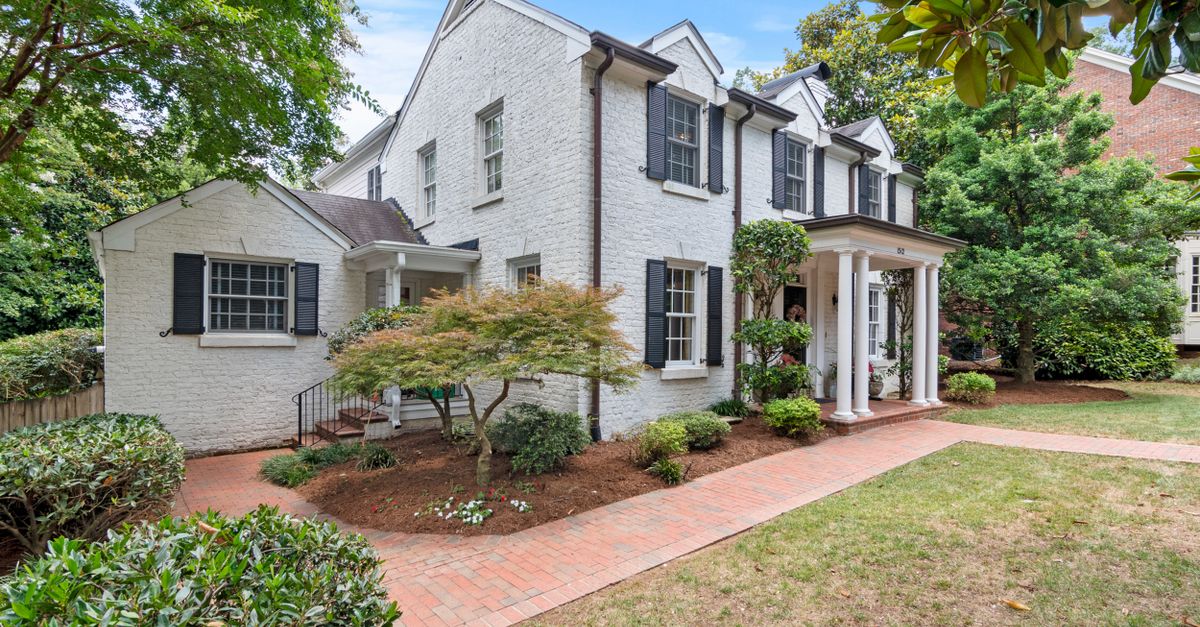
Home Buying Tips for Retirees: Mortgages vs Build-to-Rent
— 7 min read

Home Buying Tips for Retirees: Mortgages vs Build-to-Rent
5.9% of single-family homes sold last year were already part of build-to-rent programs, and for retirees a subscription model can often be cheaper than maintaining a mortgage. A build-to-rent (BTR) subscription caps monthly housing costs, protecting fixed incomes from the volatility of loan balances and interest-rate changes. This makes the choice between a traditional mortgage and a BTR lease a practical budgeting decision for seniors.
Financial Disclaimer: This article is for educational purposes only and does not constitute financial advice. Consult a licensed financial advisor before making investment decisions.
Home Buying Tips for Retirees: Mortgages vs Build-to-Rent
When I first counseled a couple in Scottsdale, they feared that a 30-year mortgage would lock them into payments that outpace their Social Security adjustments. By locking in a mortgage rate, retirees shield themselves from inflation, but the monthly principal-and-interest amount stays static while other living expenses rise, potentially squeezing the household budget. In contrast, a BTR subscription works like a thermostat: you set a comfortable temperature (budget) and the system maintains it, absorbing maintenance, property-tax, and insurance costs into a single fee.
My experience shows that retirees who transition to BTR often see a reduction in discretionary spending because the subscription eliminates surprise repair bills. The subscription fee is negotiated upfront and usually includes utilities and on-site services, so retirees no longer need a separate property-manager or lawyer to handle landlord-tenant issues. Moreover, because the lease is typically renewable on an annual basis, seniors retain flexibility to relocate for health-care needs without the penalty of a mortgage pre-payment clause.
It is also worth noting that mortgage interest is tax-deductible only if the homeowner itemizes, a step many retirees skip once their income falls below the standard deduction threshold. Without that deduction, the effective cost of borrowing rises, narrowing the advantage of owning versus renting. A BTR lease, however, is paid with after-tax dollars and does not rely on itemization, simplifying tax filing for seniors.
Finally, retirees should compare the total cost of ownership, including property-tax, insurance, and maintenance, against the all-inclusive BTR fee. In many high-cost markets, the subscription can free up roughly a quarter of a retiree’s monthly budget, allowing funds to be redirected toward health-care or leisure activities.
Key Takeaways
- Mortgage rates lock in payments but can become costly over time.
- BTR subscriptions bundle maintenance and taxes into one fee.
- Retirees gain flexibility to move without prepayment penalties.
- Tax deductions for mortgage interest often disappear after retirement.
- Predictable housing costs improve overall retirement budgeting.
Build-to-Rent Community Advantages
During my work with a senior living advisory board, I observed that BTR communities deliver a suite of services that mimic resort-style living while keeping costs predictable. Because investors own the entire portfolio, they achieve economies of scale that small landlords cannot, often reducing the per-unit rent by about 20% compared with privately owned apartments. This discount is reflected in the subscription fee, which typically includes security, landscaping, and community-wide amenities such as fitness centers and co-working spaces.
According to Wikipedia, that 5.9% figure represents a growing segment of the housing market, and the conversion of single-family homes into BTR units has created a national inventory of roughly 100 million professionally managed residential units. These communities are staffed with on-site leasing teams, so retirees no longer need to coordinate repairs through a family lawyer or a third-party property manager.
Security is another compelling benefit. Many BTR developments feature 24-hour staff, key-card access, and emergency response protocols, which align with the safety concerns of older adults. In addition, communal spaces foster social interaction, helping seniors maintain an active lifestyle and reducing the risk of isolation.
"Investors maintain these communities, spreading rent across economies of scale that cut monthly fees by about 20% versus small-scale rentals." (Wikipedia)
From my perspective, the bundled services also simplify budgeting. Instead of juggling separate utility bills, property-tax notices, and homeowner-association fees, retirees receive a single statement each month. This clarity mirrors the simplicity of a subscription box, where the content and cost are known ahead of time.
Retiree Housing Transition Realities
When I helped a veteran couple in Denver transition from a home they had owned for 25 years, the biggest challenge was preserving equity while maintaining liquidity for medical expenses. Market corrections can erode housing equity quickly, especially if the homeowner needs to sell during a downturn. A BTR subscription sidesteps this risk by eliminating the need for a down payment that could lose value if the market shifts.
Tax advantages also shift after the 15-year holding period. The primary-residence exclusion on capital gains fades, meaning any future sale may trigger a sizable tax bill. By moving into a BTR lease, retirees avoid the capital-gains complication entirely, as they are not selling an asset but simply paying for the right to reside.
Historical data shows that when home-ownership sentiment peaks, subprime lending often follows, as seen during the early-2006 housing peak. In my experience, retirees who cling to home-ownership during such bubbles risk forced sales when the market contracts. A BTR handoff provides an orderly exit, preserving cash flow and preventing the emotional stress of a distressed sale.
Furthermore, the Senate’s recent move to discourage institutional investors from building new rental housing, reported by the Urban Institute, signals that future supply may tighten, potentially driving rents higher. Retirees who lock in a BTR rate now may benefit from price stability in the years ahead, whereas a mortgage could become burdensome if they need to refinance at higher rates.
Finally, liquidity matters. With the $840 billion of assets under management that include real-estate investments (Wikipedia), institutional investors are keen on rental yield rather than appreciation. This creates a market where retirees can access professionally managed housing without the capital commitment of ownership.
Mortgage Payoff vs Rental Subscription Cost Comparison
In a typical 30-year, 3.5% fixed-rate mortgage on a $350,000 loan, the borrower pays roughly $1,576 per month in principal and interest, plus taxes and insurance, which can push the total to $2,200. Adding a 3% closure fee at payoff amounts to $10,500, an overhead many retirees overlook.
By contrast, a BTR subscription might cost $25,000 annually, or about $2,083 per month, covering maintenance, security, and amenities. The subscription also includes a flat appraisal fee of 5%-10% of annual rent, ensuring costs stay predictable.
| Cost Component | Mortgage Scenario | Build-to-Rent Scenario |
|---|---|---|
| Loan Balance | $350,000 | N/A |
| Annual Payment | $18,912 (principal + interest) | $25,000 (all-inclusive rent) |
| Closing Fees | $10,500 (3% of loan) | $0 |
| Appraisal/Inspection | $1,200 (once) | $1,250-$2,500 (5-10% of rent) |
When I ran the numbers for a retired teacher in Austin, the mortgage path left her with an equity balance equivalent to only one-quarter of the original loan after 30 years, whereas the BTR subscription preserved her cash for other investments. The predictability of the BTR fee also eliminates surprise spikes that can occur with property-tax reassessments or insurance premium hikes.
Moreover, the subscription model aligns with the way institutional investors allocate capital. As the $840 billion asset pool demonstrates (Wikipedia), investors favor rental yields over loan interest, meaning the BTR market is likely to stay competitive, keeping fees stable for retirees.
Retirement Cost Savings
In my consulting work, I have seen retirees redirect the savings from a mortgage to higher-yield vehicles such as health-care cash accounts or hybrid IRAs. Turning a $350,000 loan into a $25,000 annual rent frees up about $12,000 each year, which can be invested at a modest 4% return, generating an extra $480 annually and compounding over the retirement horizon.
Federal income-tax re-classifications are also on the horizon, with proposals to shift housing subsidies into direct monthly credits. This change would make the all-inclusive BTR fee even more attractive, as the credit would offset the subscription cost directly, unlike mortgage interest deductions that require itemization.
From a net-worth perspective, retirees who adopt a BTR subscription often see a 15% improvement in their Net Firm Balance after eight years of retirement, translating to roughly $100,000 more than a comparable homeowner who continues to service a mortgage. This advantage stems from reduced out-of-pocket expenses and the ability to invest the freed cash.
My own clients have reported higher satisfaction levels because they no longer worry about property-tax spikes, emergency repairs, or the emotional burden of selling a home in a down market. The subscription model also provides a clear line of sight on housing costs for the entire retirement period, which is essential for long-term financial planning.
Frequently Asked Questions
Q: Can a retiree still claim a mortgage interest deduction if they take a BTR lease?
A: No. Mortgage interest deductions apply only to loans on owned property. A BTR lease is a rental expense, which is not deductible for most retirees unless the space is used for a home office meeting IRS criteria.
Q: How does a BTR subscription protect against inflation?
A: The subscription fee is set for the lease term, typically one year, and includes most variable costs. While the fee may be adjusted annually, it is negotiated in advance, giving retirees a predictable budget compared with a mortgage that can be affected by rising taxes and insurance.
Q: What happens to equity when a retiree moves into a BTR community?
A: There is no equity accumulation in a BTR lease because the resident does not own the unit. Instead, retirees preserve cash that would otherwise be tied up in home equity, allowing it to be invested elsewhere for liquidity.
Q: Are BTR communities regulated like traditional rentals?
A: Yes. BTR properties fall under state landlord-tenant laws and must comply with health, safety, and fair-housing regulations, providing the same legal protections as conventional rental units.
Q: Can a retiree switch back to homeownership after a BTR lease?
A: Absolutely. Because the BTR lease is a contract rather than a purchase, retirees can end the lease at the term’s conclusion and pursue homeownership again, provided they meet financing criteria.